


Single Core Cable
SAISONIC have a comprehensive collection of wire and single core cable that includes switchgear and tri-rated cable, hook-up and equipment wire, thermocouple, and high-temperature wire.Single core cables have a simple structure and are widely used in both civil and industrial electricity
Category:
Details
What is a single core cable
A single core cable is a cable with only one conductor. Its main feature is that it has high insulation performance and good withstand voltage capability, and is suitable for transmission of high voltage and large current. Since single-core cables have only one conductor, they produce much less electromagnetic interference than multi-core cables, which is important for applications that require a high degree of precision. The single-core cable also has a small outer diameter and good anti-corrosion performance, which is suitable for installation in narrow spaces.
What is a wire?
A wire is a single strand of metal, or multiple strands together in a single insulated sleeve. They send and receive telecommunications signals, bear mechanical loads and can transfer electricity. Wires are available in different sizes and types such as solid, single core, stranded, and braided.
What is the difference between wire and single core?
Wire and single core can refer to the same thing based on the usage of the term wire. If there is just a single strand, then the wire would be single core.
 Single-core cable VS. Multi-core cable
Number of conductors: Single-core cables have only one conductor, while multi-core cables have multiple conductors.
Scope of application: Single-core cables are suitable for scenarios where high voltage and high current need to be transmitted, such as oil refining, chemical industry, metallurgy and other industries. Multi-core cables are suitable for communication, data transmission, control systems, railway signal transmission and other fields, and can also be used for power supply of electrical equipment inside buildings and signal transmission on robots and mechanical equipment.
Anti-interference ability: single-core cable has high insulation performance and withstand voltage ability, and the electromagnetic interference is relatively small. The multi-core cable can not only transmit multiple signals at the same time, but also resist external electromagnetic interference to a certain extent.
Application scenarios of single-core cables
Single-core cables are generally used in high-voltage power transmission systems, transformer wiring, and oil refining, chemical, metallurgical and other industries that need to transmit high-voltage and high-current scenarios. In addition, the single-core cable has better anti-corrosion performance and is also suitable for outdoor operation.
Advantages and disadvantages of single-core cables
Both single-core and multi-core cables have advantages and disadvantages. The advantage of a single-core cable is that it has high insulation performance and voltage resistance, and at the same time, the electromagnetic interference is relatively small, but because it has only one conductor, it cannot transmit multiple signals.
SAISONIC Cables is a leading supplier of UL and CSA dual rated single core wires. Please contact us for technical support with cable selection for your application or to discuss your specific requirements.

SAISONIC Factory
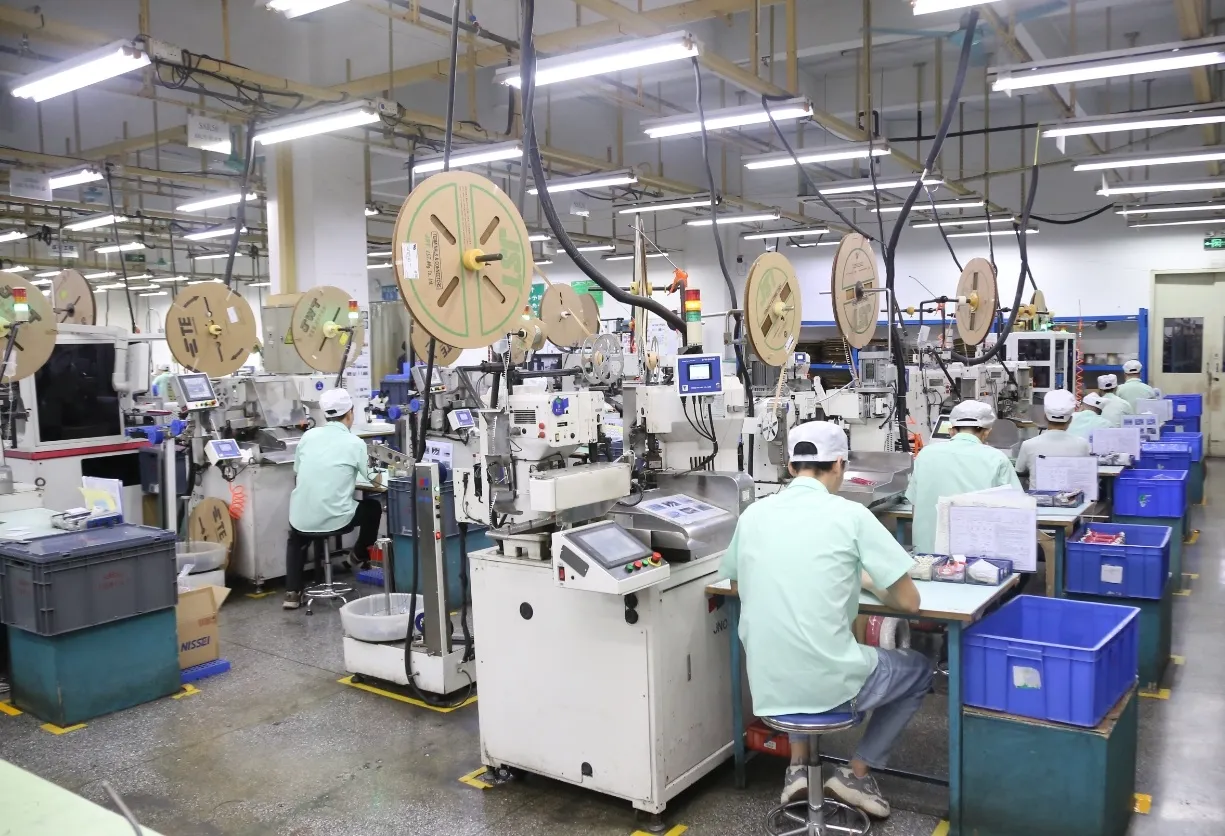
Wire termination

Overmolding Cables

Warehouse

ISO9001
ISO13485
ISO14001
ISO45001
IATF16949
SONY GP
Keyword:
Saisonic
Next:
Inquire
Dear customer,if you like to learn more about our products,please let us know and we will contact you as soon as possible
Related Products
Manufacturing all kinds of wire harness using high quality wire and cable.wire cutting.stripping.crimping.termination.Support various customizations.
Developing and manufacturing custom cable assembly and wiring harness.33+ years of experience contact for a free quote
The sensor wire harness assembly(NTC Temperature Sensor 10K 20K 50K 100K Thermistor Temperature Sensing Wire Harness) is the key line connecting the sensor and the control unit, it plays a vital role in the electrical system. The main functions of the sensor harness include signal transmission, electromagnetic shielding and anti-interference, environmental adaptability and a wide range of application fields
Wiring harness components are used in a wide range of automotive applications, from the engine room to all parts of the body, wiring harness plays a vital role in ensuring the normal operation and safety performance of various automotive systems.
Manufacturing all kinds of wire harness using high quality wires and cables.wire cutting.stripping.crimping.termination.Support various customizations.
Developing and manufacturing custom cable assembly and wiring harness.33+ years of experience contact for a free quote.
Jiuchong Industrial Zone, Daning Village, Humen Town, Dongguan , Guangdong 523930, China
