

Control Cable Harness
A Wire Harness, also known as a cable harness or wiring assembly
Category:
Details
Wire Harness Assemblies:
A Wire Harness, also known as a cable harness or wiring assembly, is a grouping of wires, cables, or subassemblies designed to transmit signals or electrical power. A basic Wire Harness may include as few as three discreet components, while the more classic harnesses include many more wires and other passive, and potentially active, components.A Wire Harness is often confused with a cable assembly; the main difference between the two is that a cable assembly usually has just two ends while a wire harness has multiple branches/ends running off in many different directions with multiple terminations on each branch.
Wire Harness Design:

A wire harness is typically designed to simplify the manufacture of a larger component, and is designed based on the geometric and electrical requirements of the equipment it is to be installed in.Wire harnesses are commonly used in the electronics industry, the automotive industry, in the manufacture of construction machinery and industrial equipment, as well as in the manufacture of white goods such as washing machines and dryers, refrigerators, and other household appliances.The wire harness simplifies the building of these larger components by integrating the wiring into a single unit, or several units, for “drop-in” installation. By binding the many wires, cables, and subassemblies into a harness, the OEM or installer only has one component to install. In addition, a wire harness allows the completed assembly to be better secured against the effects of abrasion and vibration, and by constricting the wires into a non-flexing bundle, usage of space is optimized.Once a design is established, the process of building a wire harness starts with the development of a schematic that is used to create the manufacturing paperwork and the assembly board for the harness. The assembly board, or pin board, is a full size diagram of the harness and shows all of the components and their location and also serves as the workbench for the harness. The wires needed for the harness are supplied on a master reel and are cut to the desired length and identified with printing or labeling if necessary. Once cut to the proper length, the wires are stripped to expose the uninsulated conductor and then fitted with any required terminals or connector housings. These wires and components then are put on the pin board and are bound together by any necessary straps, cable ties, cable lacing, sleeves, tapes, weaves of extruded string, or any combination of these.
In spite of the desire to increase automation, wire harnesses, in general, continue to be manufactured by hand because of the many different processes involved.
Wire Harness Assembly Process:
◎Installing the wires and/or subassemblies on the assembly board.
◎Routing wires and/or subassemblies through any required sleeves.
◎Applying wraps, ties, or tapes, particularly on any branch-outs.
◎Crimping terminals onto wires, especially if more than one wire goes into one terminal.
Wire Harness Testing:
Testing the electrical functionality of a wire or cable harness can be done with the aid of a test board. The test board is pre-programmed with the required electrical characteristics, and the completed harness can be plugged into the test board and tested individually or in multiple numbers.

SAISONIC Factory
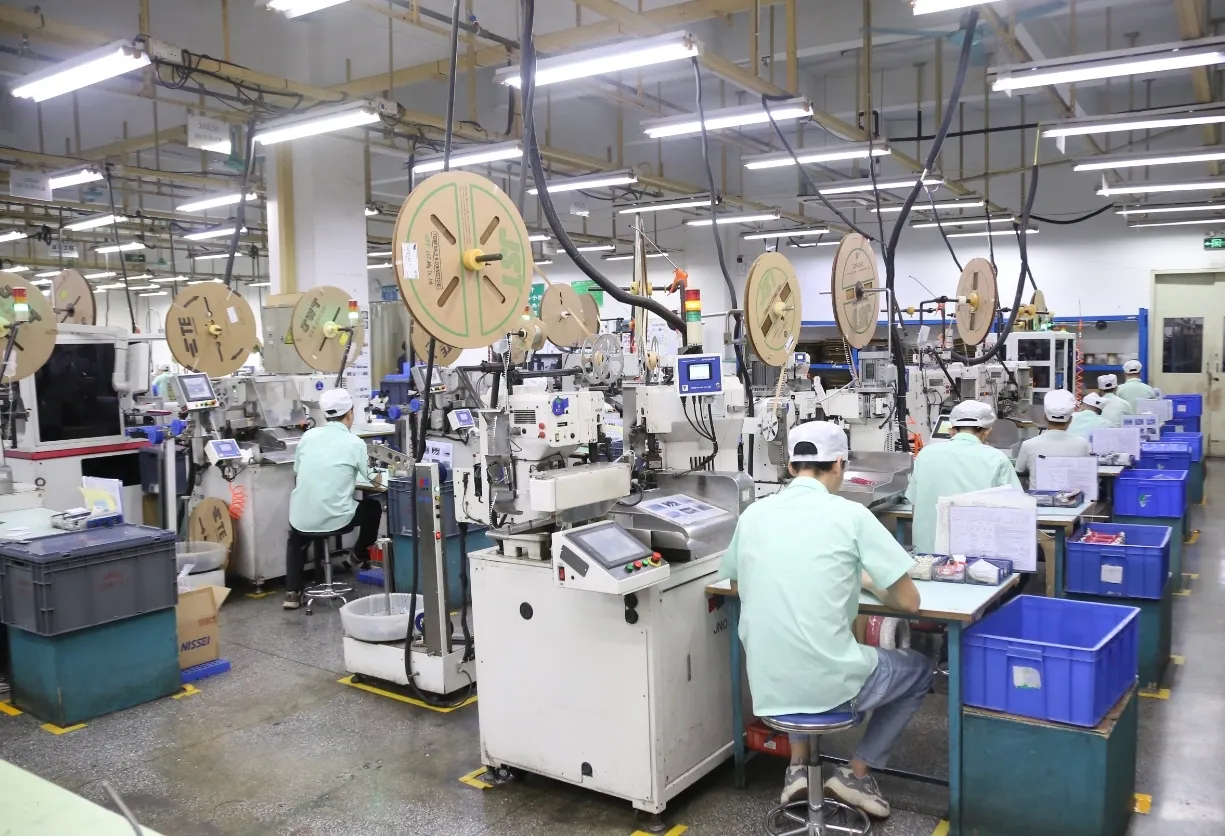
Wire termination

Overmolding Cables

Warehouse

ISO9001
ISO13485
ISO14001
ISO45001
IATF16949
SONY GP
Keyword:
Wire harness
Next:
Inquire
Dear customer,if you like to learn more about our products,please let us know and we will contact you as soon as possible
Related Products
Manufacturing all kinds of wire harness using high quality wire and cable.wire cutting.stripping.crimping.termination.Support various customizations.
Developing and manufacturing custom cable assembly and wiring harness.33+ years of experience contact for a free quote
The sensor wire harness assembly(NTC Temperature Sensor 10K 20K 50K 100K Thermistor Temperature Sensing Wire Harness) is the key line connecting the sensor and the control unit, it plays a vital role in the electrical system. The main functions of the sensor harness include signal transmission, electromagnetic shielding and anti-interference, environmental adaptability and a wide range of application fields
Wiring harness components are used in a wide range of automotive applications, from the engine room to all parts of the body, wiring harness plays a vital role in ensuring the normal operation and safety performance of various automotive systems.
Manufacturing all kinds of wire harness using high quality wires and cables.wire cutting.stripping.crimping.termination.Support various customizations.
Developing and manufacturing custom cable assembly and wiring harness.33+ years of experience contact for a free quote.
Jiuchong Industrial Zone, Daning Village, Humen Town, Dongguan , Guangdong 523930, China
